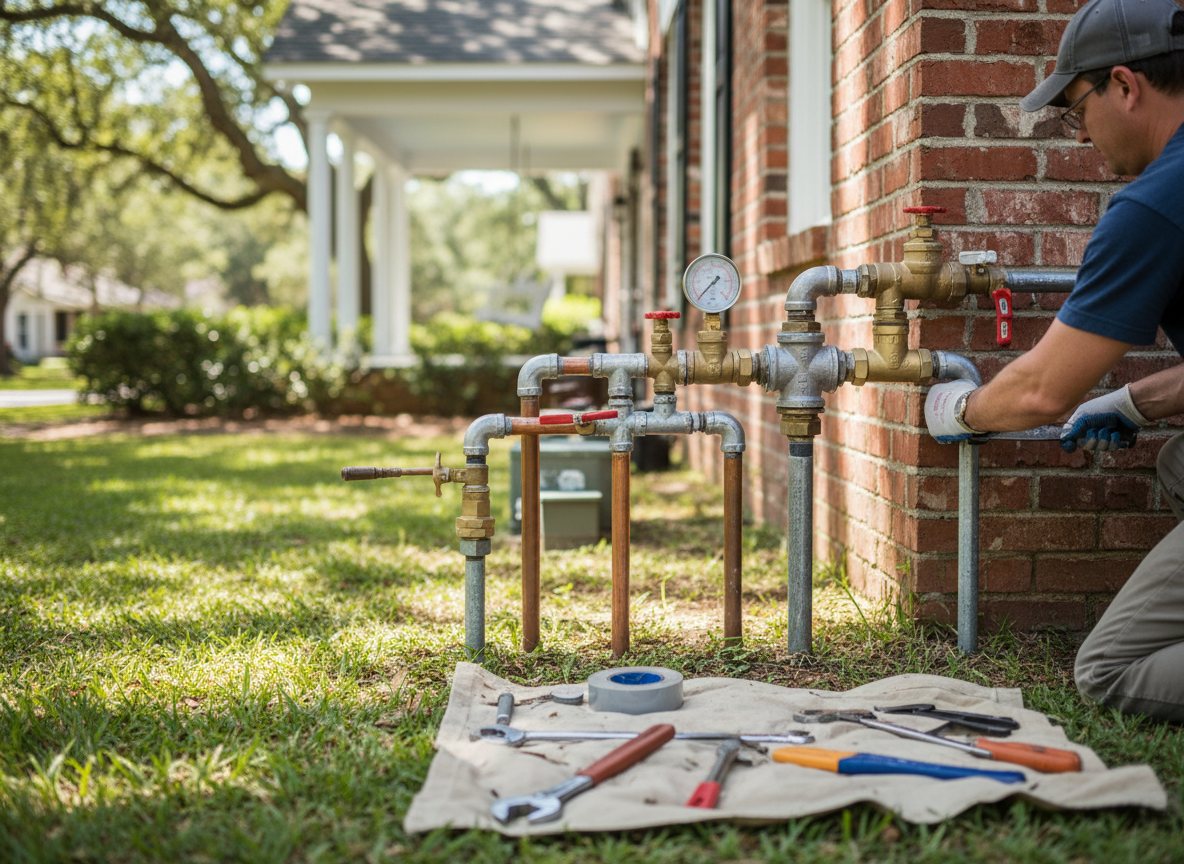
Backflow prevention work begins with locating the main water line entry point and identifying any existing valves or cross connections. Plumbers use pressure gauges and test cocks to check flow direction, then install or repair devices such as double-check valves or reduced-pressure-zone assemblies. Equipment includes pipe wrenches, threading tools, and tracer wire for locating lines buried in Richland County soil. Common pipe materials encountered include older galvanized steel, polybutylene in homes built before the mid-1990s, copper, and newer PE or PEX lines that require specific transition fittings.
Red clay soils common upstate expand and contract with moisture, stressing joints near backflow devices, while sandy coastal soils allow easier digging but can shift during heavy rains. High water tables in areas near the Congaree River often require above-ground or vaulted installations to keep valves accessible. Private wells in Lexington and Irmo add another layer, as pumps can create negative pressure that draws contaminants backward. Hurricane season brings flooding risks that overwhelm standard devices, and occasional winter freezes can crack unprotected valves if they lack proper insulation or drain ports.
Warnings include never bypassing a failed device during testing and avoiding DIY repairs on lines that may contain lead solder in pre-1986 homes. Proper placement prevents stagnant water from sitting in the device during hot summers, which can promote bacterial growth. Homeowners should schedule checks before hurricane season and after any freeze event to confirm the assembly still holds pressure.
The referral process connects callers with independent local plumbers who evaluate the specific setup rather than applying a one-size-fits-all approach.
Technician insight
In Columbia, the thing that catches most people out with Backflow Prevention is how high water tables near the river lift sandy soil and expose shallow PE lines, so valves installed without proper support end up leaning and leaking within a couple seasons.
Backflow Prevention Services We Offer
✓Residential Backflow Valve Installation
Places code-compliant valves on main lines to stop reverse flow from irrigation or hose bibs into household water.
✓Backflow Device Testing
Checks existing assemblies for proper operation using calibrated gauges to meet local health requirements.
✓Cross Connection Inspection
Identifies points where non-potable sources could enter the main line in homes with wells or sprinkler systems.
✓Backflow Valve Replacement
Swaps out corroded or outdated valves on galvanized or polybutylene lines common in older Richland County neighborhoods.
✓Private Well Backflow Protection
Adds check valves and air gaps to prevent well pump pressure from pulling surface water into the supply.
✓Freeze Protection for Backflow Assemblies
Installs insulated enclosures or drain-down fittings to guard valves against occasional winter temperature drops.
How it works
- 1
Site Evaluation
The plumber inspects the main line entry, existing piping materials, and any visible cross connections on the property.
- 2
Testing and Diagnosis
Pressure tests determine whether current devices hold or allow reverse flow under local water pressure conditions.
- 3
Recommendation
The plumber explains options for repair, replacement, or new installation suited to soil type and water source.
- 4
Work Coordination
Once approved, the plumber completes the selected service and verifies the assembly functions correctly.
Pricing
Pricing depends on the job and is discussed with the plumber after you call.