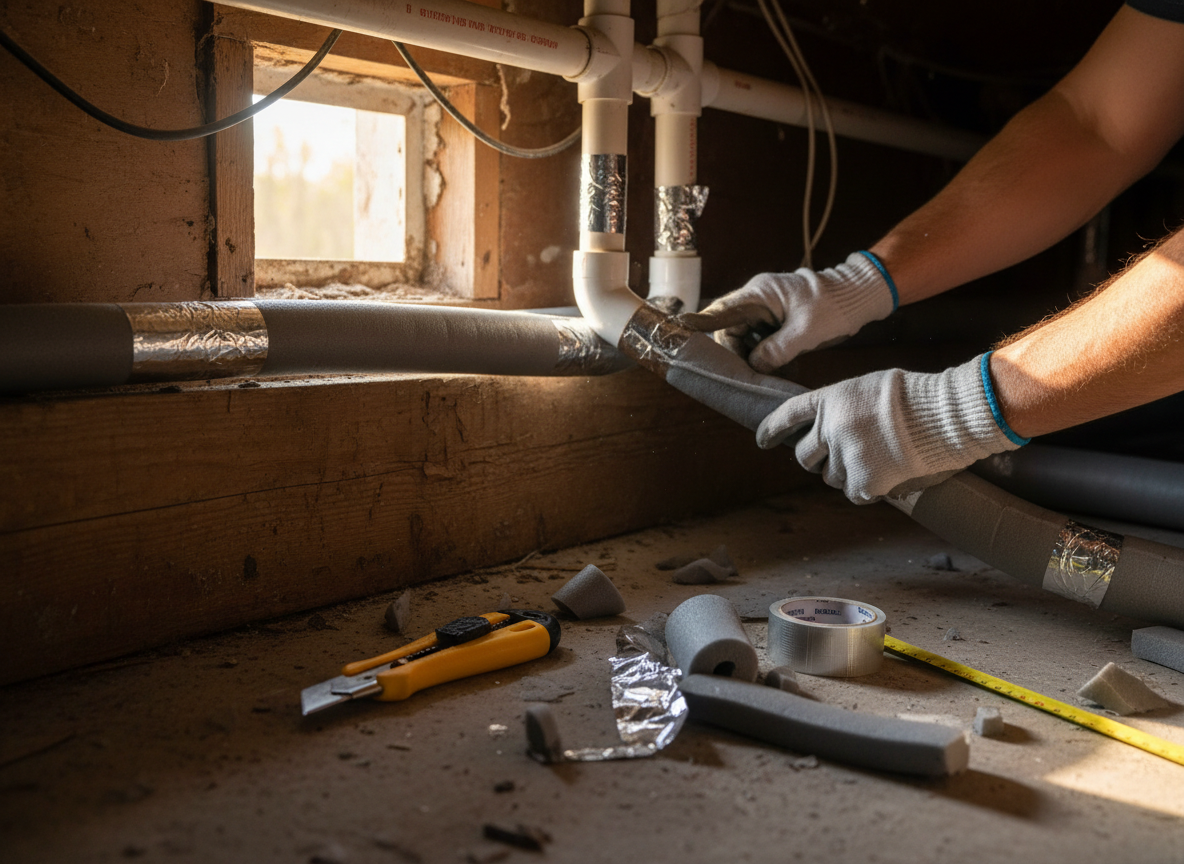
Independent plumbers begin by exposing the main water line and identifying the pipe material, which in older Richland County homes often includes galvanized steel or polybutylene while newer builds use copper, PE or PEX. They then select closed-cell foam or fiberglass sleeves sized to the pipe diameter and secure them with UV-resistant tape or clamps. In areas with high water tables near West Columbia, they add an outer vapor barrier to limit moisture absorption.
Equipment typically includes a pipe locator, utility knife, measuring tape and heat gun for tight bends around fittings. Where red clay soils in the upstate transition to sandy coastal ground, plumbers backfill carefully to avoid crushing the insulation. Occasional winter freezes and hurricane-driven rain both factor into the choice of outdoor-rated materials that resist both cold and saturation.
Homeowners with private wells in Irmo and Lexington often request insulation on the line from well to house to reduce heat loss in summer and prevent burst risks during rare hard freezes. Plumbers warn against using standard indoor foam on buried lines because it breaks down quickly in wet or shifting soil.
Proper insulation also reduces condensation dripping that can erode joints on copper and PEX lines. The work stays limited to the exposed or accessible sections of the main line and does not involve re-plumbing the entire system.
Technician insight
In Columbia the thing that catches most people out with Pipe Insulation is the mix of red clay and high water tables in Richland County that makes buried lines shift and crush standard foam unless an outer protective jacket is added.
Pipe Insulation Services We Offer
✓Buried Main Line Insulation
Closed-cell foam sleeves wrapped around underground supply lines to limit heat transfer and protect against shifting in sandy or clay soils common around Columbia.
✓PEX and Copper Sleeve Installation
Pre-slit foam or rubber insulation fitted over PEX and copper mains with sealed seams to stop condensation in humid subtropical conditions.
✓Galvanized and Polybutylene Protection
Heavy-duty exterior-grade wraps added to older galvanized or polybutylene lines to reduce corrosion risk from moisture trapped in Richland County soils.
✓Well Line Freeze Shielding
Insulation and heat-trace cable options placed on private well supply lines serving homes in Irmo and Lexington to guard against infrequent winter freezes.
✓Hurricane Season Condensation Wraps
Vapor-barrier jackets installed on above-ground sections to prevent dripping and joint damage during periods of heavy rain and high humidity.
How it works
- 1
Site Assessment
The plumber locates the main line, notes pipe material and checks soil type and water table depth.
- 2
Material Selection
Appropriate sleeve or wrap thickness is chosen based on exposure, climate factors and existing pipe condition.
- 3
Installation
Insulation is cut, fitted and secured along accessible sections with sealed joints and protective outer layers where needed.
- 4
Backfill and Inspection
Trench is restored and the line is checked for proper coverage and drainage away from the home.
Pricing
pricing depends on the job and is discussed with the plumber after you call