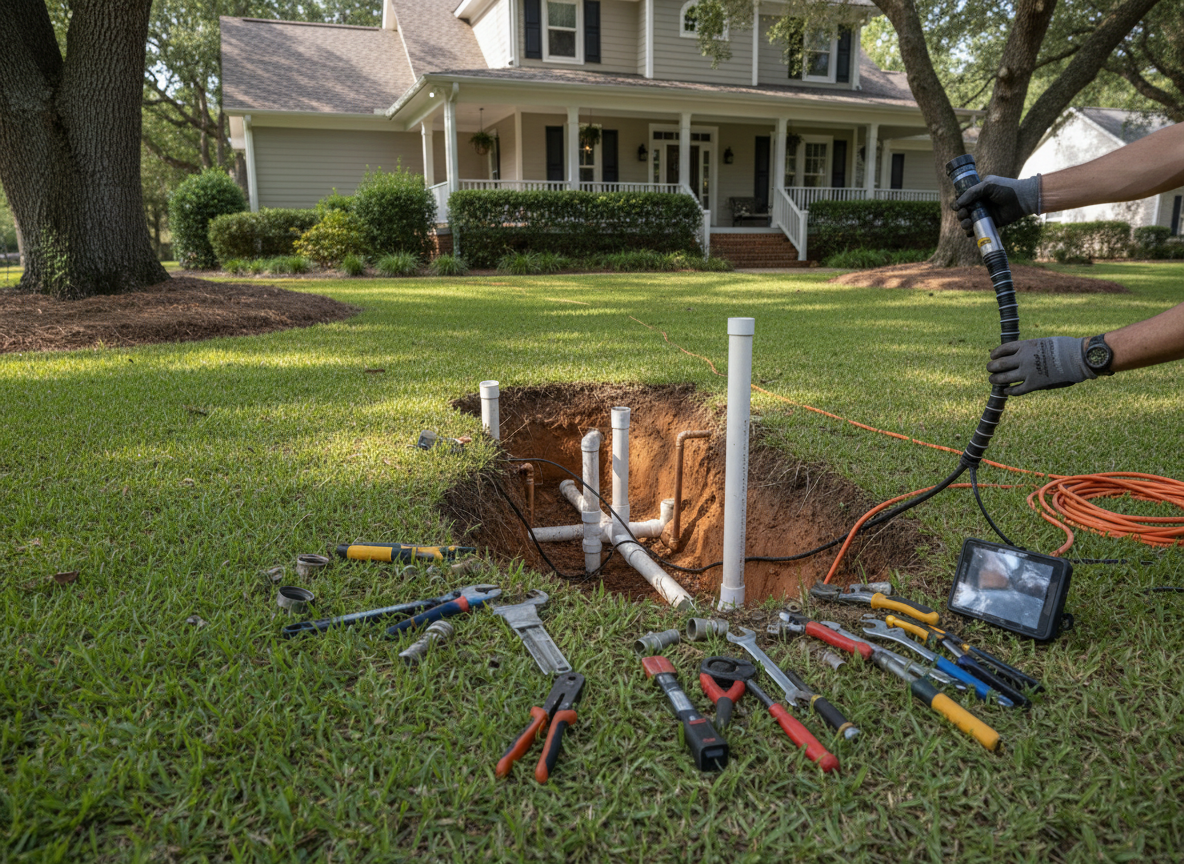
Service line inspection begins with accessing the line at the meter or foundation entry point. Plumbers use video camera equipment to travel the pipe interior while recording footage of joints, walls, and any obstructions. They note pipe material transitions and measure approximate depth and slope along the run.
Common materials in Richland County include galvanized steel in older neighborhoods, polybutylene in 1980s homes, copper in mid-century builds, and newer PE or PEX replacements. Red clay soils upstate hold moisture differently than sandy coastal soils, affecting external corrosion rates. High water tables near the Congaree and private wells add hydrostatic pressure that can stress older lines.
Occasional winter freezes and hurricane-driven flooding create expansion stress and soil movement that video inspection can document before leaks appear. The process flags sections needing repair or full replacement and produces a written report with still images for the homeowner and any downstream contractors.
Warnings include avoiding excavation until the inspection report is reviewed, because unmarked utilities and shallow lines are frequent in established Columbia neighborhoods.
Technician insight
In Columbia the thing that catches most people out with Service Line Inspection is how quickly red clay around older galvanized lines holds water after a heavy rain, accelerating external rust even when the interior still looks passable on camera.
Service Line Inspection Services We Offer
✓Video Camera Inspection
Camera footage reveals interior pipe condition, root intrusion, and joint separation without digging up the yard.
✓Material Identification
Plumbers determine whether the line is galvanized, polybutylene, copper, PE, or PEX to guide repair decisions.
✓Leak Detection and Pinpointing
Pressure testing combined with camera work locates active leaks before they surface in driveways or landscaping.
✓Depth and Route Mapping
Electronic locating equipment records the exact path and burial depth of the service line for future reference.
✓Soil and Water Table Assessment
Notes on red clay versus sandy soil conditions and high water table influence help predict external corrosion risk.
How it works
- 1
Initial Assessment
A plumber discusses the property age, known pipe materials, and any symptoms such as low pressure or wet spots.
- 2
On-Site Access
The line is exposed at the meter box or cleanout, and camera equipment is introduced.
- 3
Inspection and Recording
Video travels the full accessible length while depth, material, and defects are logged.
- 4
Report Delivery
Findings are summarized with images and recommendations for any needed repairs or replacements.
Pricing
Pricing depends on the job and is discussed with the plumber after you call.