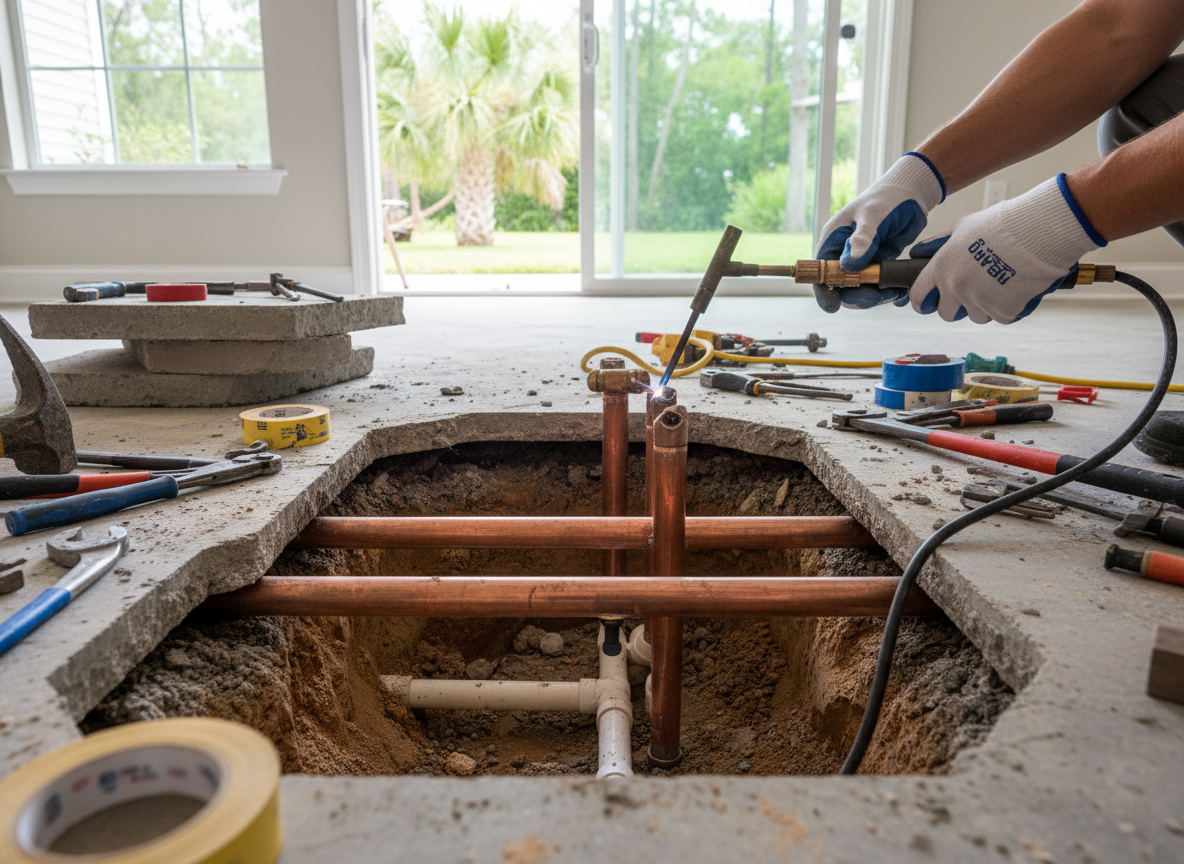
Slab leaks in Columbia homes often stem from older galvanized or polybutylene supply lines that corrode or become brittle under the area's humid subtropical conditions. Independent plumbers start by using acoustic listening devices and video camera inspection to pinpoint the leak without unnecessary demolition. Once located, they evaluate soil conditions, noting that Midlands sandy soils differ from upstate red clay and can shift with high water tables or occasional freezes, which influences whether excavation or trenchless methods are chosen.
Trenchless options such as pipe bursting or epoxy lining allow repair crews to replace sections of copper, PE or PEX piping while minimizing damage to finished floors. In areas with private wells, plumbers isolate the affected line first to avoid drawing sediment during the work. Hurricane season adds another layer, as heavy rains can raise groundwater levels and complicate access under the slab.
Soil and Climate Considerations
Local plumbers account for Richland County's mix of sandy coastal-plain soils and occasional winter freezes that stress joints in older pipe materials. High water tables common near the Congaree River basin can turn a simple leak into a larger excavation project if not addressed promptly.
Common Warning Signs
Homeowners in West Columbia and Irmo frequently notice unexplained spikes in water bills or warm spots on flooring before visible moisture appears. Plumbers recommend checking for these indicators especially after heavy rains or brief freezes that can exacerbate existing weaknesses in polybutylene or galvanized lines.
Technician insight
In Columbia, the thing that catches most people out with Slab Leak Repair is the high water table sitting just a few feet below grade in many Richland County neighborhoods. Sandy soils here shift more than the red clay upstate when occasional freezes hit, and that movement often finishes off already-weak polybutylene or galvanized joints under the slab.
Slab Leak Repair Services We Offer
✓Slab Leak Detection
Plumbers use electronic listening equipment and camera scoping to locate leaks under concrete slabs without major disruption to flooring.
✓Trenchless Pipe Replacement
Pipe bursting or lining methods allow replacement of damaged sections of copper, PEX or PE lines while preserving existing concrete and landscaping.
✓Epoxy Pipe Lining
Interior coating restores integrity to aging galvanized or polybutylene pipes affected by local soil movement and moisture.
✓Slab Leak Excavation Repair
Targeted digging addresses severe leaks where trenchless options are not feasible due to pipe material or soil conditions.
✓Private Well Line Isolation
Plumbers separate well supply lines from municipal connections to prevent contamination during slab leak work.
How it works
- 1
Initial Assessment
The plumber reviews water usage patterns and visible signs to determine if a slab leak is likely.
- 2
Leak Location
Electronic and camera tools trace the exact position of the leak beneath the slab.
- 3
Repair Method Selection
Soil type, pipe material and water table conditions guide the choice between trenchless or excavation approaches.
- 4
Line Restoration
The plumber completes the fix and verifies flow and pressure before restoring access points.
Pricing
Pricing depends on the job and is discussed with the plumber after you call.