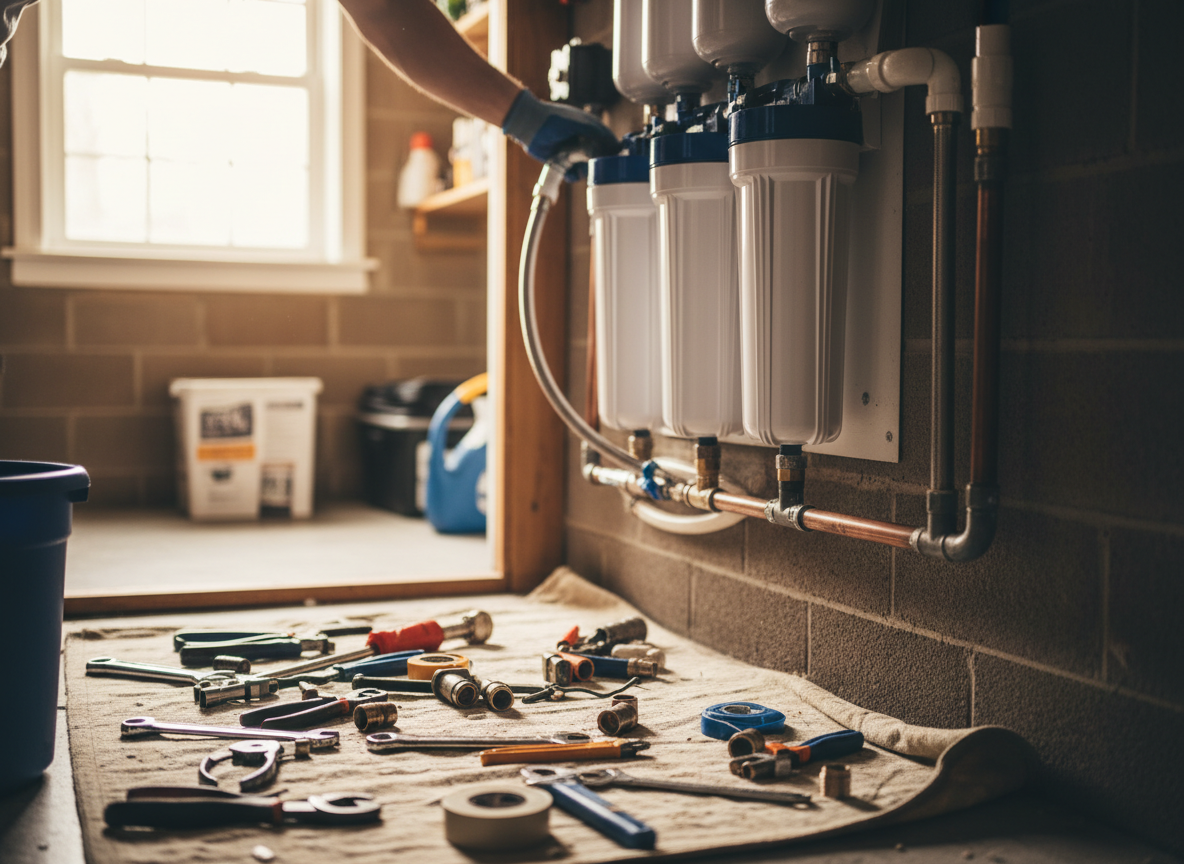
Independent local plumbers assess the incoming main line and existing piping before selecting equipment such as sediment filters, carbon tanks, or reverse osmosis units sized for household flow rates. They excavate or access the line at the point of entry, integrate the filtration housing with shutoff valves, and ensure bypass loops allow maintenance without shutting off the entire home supply. In areas with older galvanized or polybutylene lines, they often replace short sections with PEX or copper to create reliable connection points.
Common pipe materials encountered in Richland County include galvanized steel in pre-1980 homes, polybutylene in 1980s-1990s builds, copper in mid-century properties, and newer PE or PEX runs. Plumbers match filtration connections to these materials using appropriate transition fittings to avoid leaks. Equipment is chosen based on whether the home uses municipal water or a private well, with additional sediment stages often added for well sources.
South Carolina's humid subtropical climate brings occasional freezes that can affect above-ground components and high water tables in parts of Columbia that require careful trenching to keep filter housings above standing water. Red clay soils upstate compact differently than sandy coastal soils near Irmo, influencing how stable the installation trench remains. During hurricane season, plumbers prioritize systems with secure, elevated placements to reduce flood risk to electrical components on UV or booster units.
Technician insight
In Columbia, the thing that catches most people out with Water Filtration System Installation is hitting high water tables along the Congaree river corridor in Richland County. Trenches fill quickly after rain, so the plumber has to stage the work between downpours and set the filter housing on a raised pad to keep electrical parts dry.
Water Filtration System Installation Services We Offer
✓Whole House Filtration Installation
Plumbers integrate a central filtration unit at the main line entry to reduce sediment and chlorine for every tap in the home.
✓Reverse Osmosis System Setup
Dedicated under-sink or whole-home reverse osmosis units are installed to address dissolved minerals and contaminants common in well water.
✓Sediment Filter Integration
A heavy-duty sediment stage is added ahead of other filtration to protect equipment from the fine particles found in local water supplies.
✓UV Disinfection Unit Installation
Ultraviolet units are mounted on the main line after filtration to neutralize bacteria, especially useful for private well sources.
✓Water Softener and Filter Combo
Plumbers combine softening resin tanks with carbon filtration to handle both hardness and taste issues in one streamlined setup.
How it works
- 1
Site Evaluation
A referred plumber visits to inspect the main line location, existing pipe material, and water source type.
- 2
System Recommendation
The plumber reviews test results and household needs to suggest appropriate filtration equipment and placement.
- 3
Installation Coordination
The plumber schedules the work, excavates or accesses the line, installs the unit, and restores the area.
- 4
Final Testing
Water flow and filtration performance are checked before the system is placed into regular service.
Pricing
pricing depends on the job and is discussed with the plumber after you call