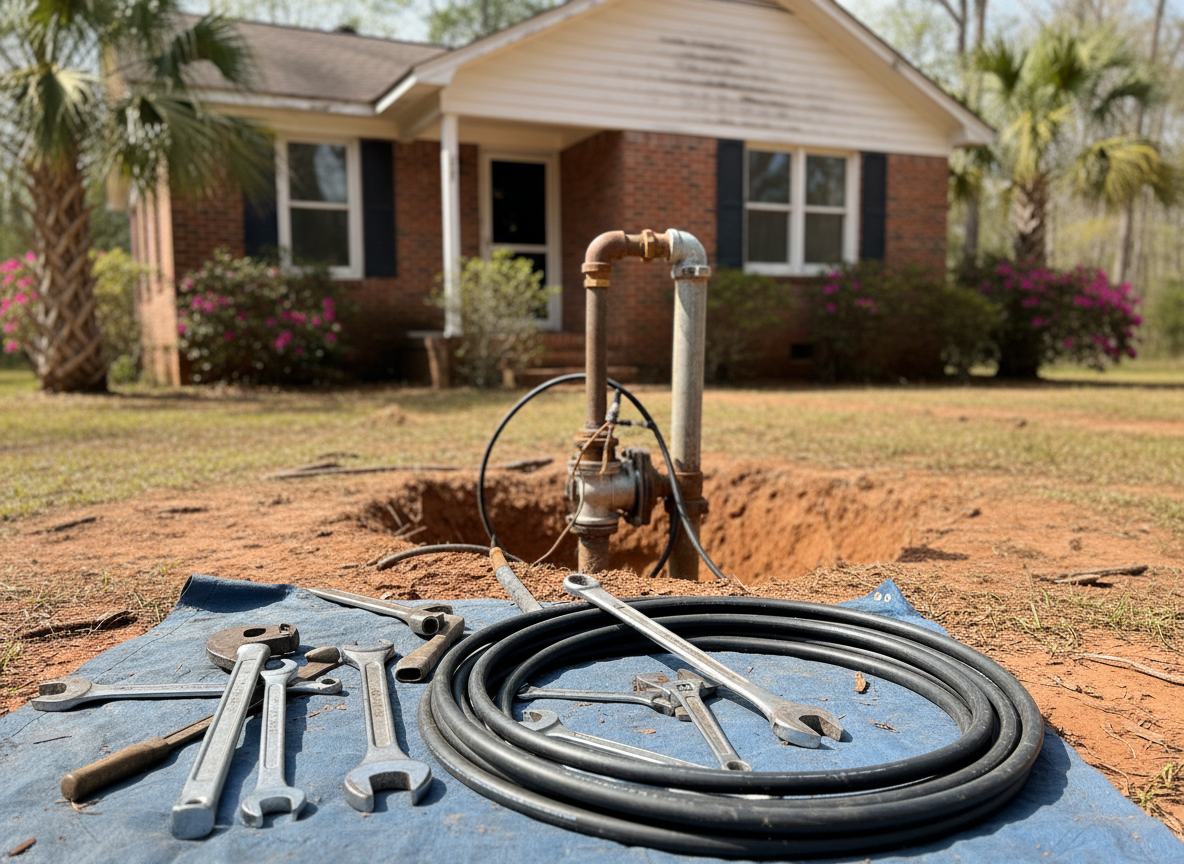
Well pump work in the Columbia area typically starts with locating the pump, whether submersible or jet style, then isolating power and water lines before any disassembly. Plumbers check pressure tanks, switches, and piping runs that often involve older galvanized steel or polybutylene in homes built before the 1990s. Newer installations favor PEX or PE tubing because these materials resist corrosion better in the region's variable soils. High water tables common near the Congaree River can complicate access, requiring careful shoring to keep trenches stable during repairs.
Equipment used includes well-specific pullers, torque arrestors, and pitless adapters suited to South Carolina conditions. In red clay soils found toward the upstate edge of Richland County, plumbers often encounter tighter digging conditions than in the sandier coastal plain areas. Occasional winter freezes, though mild, can still split exposed lines, while hurricane season brings risks of power surges that damage pump motors. Homeowners are advised to mark well locations clearly and avoid planting deep-rooted trees nearby to reduce future access issues.
Private wells remain common outside city limits in Irmo and Lexington, where municipal water has not reached every street. When a pump fails, the referred plumber evaluates flow rates and electrical components first, then decides between repair or full replacement based on the age and condition of the drop pipe. Proper backflow prevention and pressure regulation are always checked to meet local health requirements. Seasonal guidance includes winterizing lines before any hard freeze and inspecting after heavy rains that can shift sandy soils around the well casing.
Technician insight
In Columbia, the thing that catches most people out with Well Pump Service is how high water tables near the river combine with older galvanized or polybutylene lines in homes from the 1970s and 80s. One bad freeze or heavy rain can shift the sandy pockets around the casing and create leaks that only show up after the pump has already been stressed.
Well Pump Service Services We Offer
✓Submersible Well Pump Replacement
Replaces failed submersible pumps in deep wells with new units sized for household demand, restoring consistent water pressure without frequent cycling.
✓Jet Pump Repair
Diagnoses and fixes above-ground jet pumps common on shallower wells, including impeller and seal work that often restores service without full replacement.
✓Well Pressure Tank Service
Inspects and replaces bladder-style tanks or air charges to eliminate short cycling and water hammer that can stress the entire well system.
✓Well Pump Pressure Switch Adjustment
Calibrates pressure switches to maintain steady household pressure while protecting the pump from excessive starts in high water table areas.
✓Drop Pipe and Pitless Adapter Replacement
Pulls and replaces corroded galvanized or polybutylene drop lines with PE or PEX, preventing leaks that often appear after freezes or soil shifts.
How it works
- 1
Site Evaluation
The referred plumber visits the property to locate the wellhead, test current flow, and identify the existing pump type and pipe material.
- 2
Power and Water Isolation
Electrical supply is shut off at the breaker and the system is drained before any excavation or component removal begins.
- 3
Component Repair or Replacement
The plumber pulls the pump if needed, replaces faulty parts or the entire unit, and reinstalls with updated piping suited to local soil conditions.
- 4
System Testing and Restoration
Pressure and flow are verified, electrical connections are secured, and the area around the well is restored before the homeowner regains service.
Pricing
pricing depends on the job and is discussed with the plumber after you call