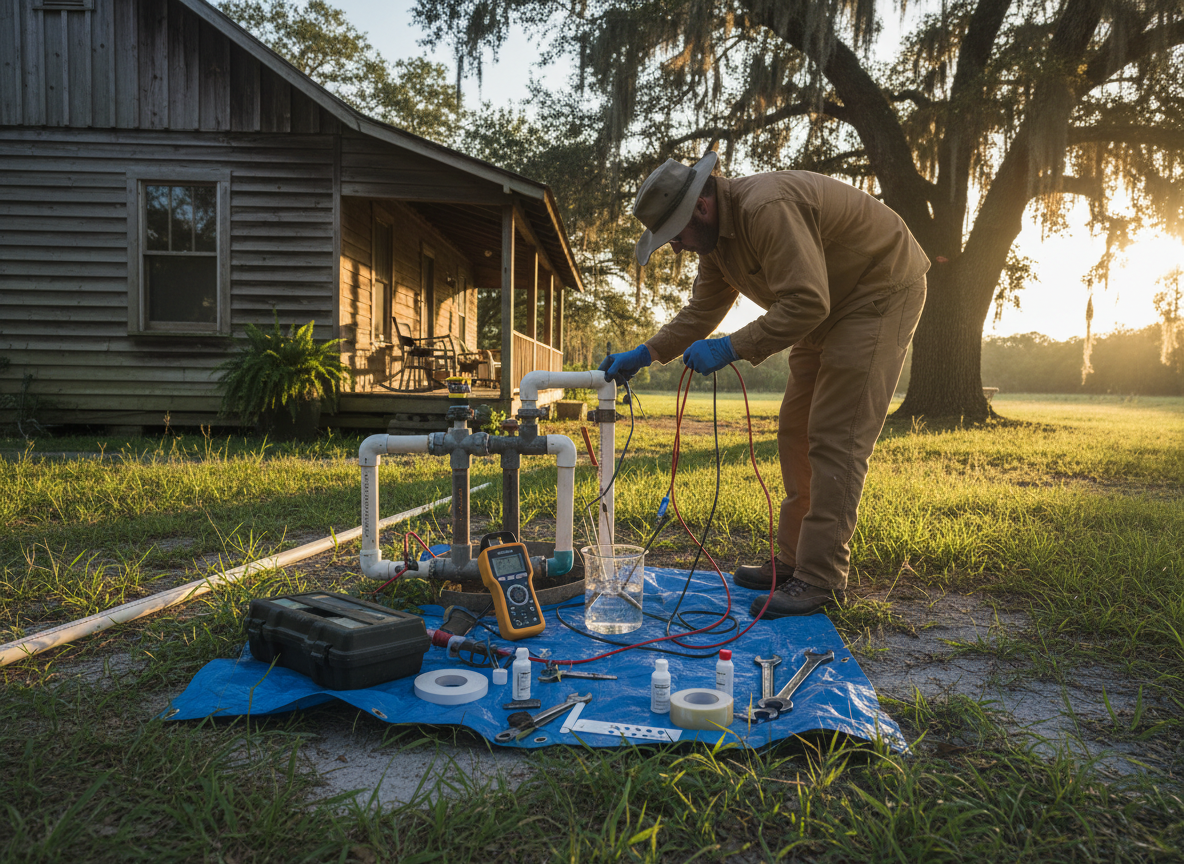
Independent local plumbers collect samples from the wellhead and household taps using sterile bottles and portable meters for immediate readings on pH, conductivity and temperature. Lab analysis follows for bacteria, nitrates, iron, manganese and other parameters common in area groundwater. Results guide any needed treatment or line work before water enters the home plumbing system.
South Carolina homes often have galvanized steel, polybutylene, copper, PE or PEX supply lines tied to wells. Red clay soils upstate hold more minerals that can leach into water while sandy coastal soils allow faster movement of surface contaminants. High water tables around Columbia increase the chance of surface water mixing with well output during heavy rains.
Hurricane season brings flooding that can introduce bacteria into shallow wells and occasional winter freezes can crack exposed lines. Plumbers check for these risks during testing and note any galvanized or polybutylene sections that may need future replacement. Homeowners receive clear reports on findings and options for addressing issues through referred local professionals.
Technician insight
In Columbia the thing that catches most people out with Well Water Testing is how red clay soils and high water tables let surface water reach shallow wells after heavy rains, especially when old galvanized lines are still in the ground.
Well Water Testing Services We Offer
✓Bacteria and Coliform Testing
Independent plumbers sample well water to detect total coliform and E. coli that can enter through cracked casings or high water tables common in Richland County.
✓Nitrate and Nitrite Screening
Testing identifies elevated nitrate levels from nearby agriculture or septic systems that affect private wells serving homes in Lexington and Irmo.
✓Lead and Copper Analysis
Plumbers check for metals leached from older galvanized or copper lines connected to wells, especially in West Columbia neighborhoods with pre-1980s plumbing.
✓PH Hardness and Mineral Testing
Analysis measures acidity and mineral content that can corrode PE or PEX lines and leave scale in appliances supplied by area wells.
✓Seasonal Contaminant Check
Post-hurricane or freeze testing looks for bacteria and sediment introduced during heavy rains or pipe movement in local clay and sandy soils.
How it works
- 1
Initial Call And Referral
Contact the service with details about your well and concerns so we can match you with an independent local plumber familiar with Richland County wells.
- 2
On-Site Sample Collection
The plumber visits the property, pulls samples from the wellhead and indoor taps, and records visible line materials and soil conditions.
- 3
Laboratory Analysis
Samples go to a certified lab for testing of bacteria, nitrates, metals and minerals while the plumber notes any pipe issues that could affect results.
- 4
Report And Next Steps
You receive the lab report and the plumber explains findings plus any main line or treatment options that can be handled by a referred professional.
Pricing
Pricing depends on the job and is discussed with the plumber after you call.