2026-11-21 ·
Preparing Your Water Line For Columbia's Wet Season
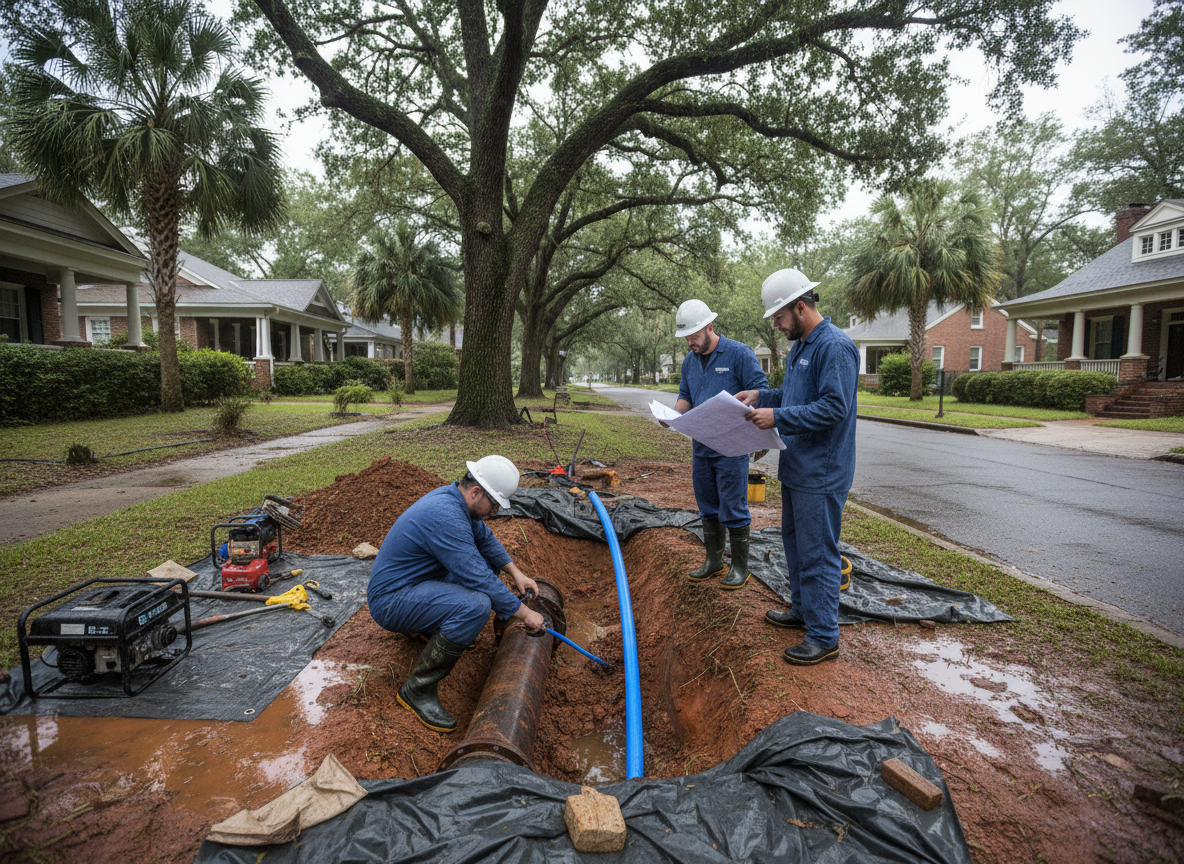
Preparing your water line for Columbia's wet season begins with checking the ground slope and soil cover over the line running from the street meter to the house foundation, paying special attention to low spots where water pools after storms.
Checking Ground Cover and Drainage Around the Line
Heavy spring and summer rains in the Midlands can wash away soil and expose pipes or create channels that direct water toward joints. Walk the likely route of the line after the next rain and note any new depressions or standing water within ten feet of the foundation. Add soil or re-grade these areas so water flows away from the house rather than settling above the pipe. Avoid planting trees or large shrubs directly over the line because roots seek moisture and can crack older materials during wet cycles. If the line passes near a driveway or sidewalk, confirm that downspout extensions empty at least six feet away so concentrated roof runoff does not saturate the trench. These simple grading adjustments limit the amount of water that reaches the pipe and reduce the chance of shifting or corrosion.
Columbia's clay-heavy soils expand when saturated, which can place extra pressure on rigid sections of pipe. Check that any visible cleanout caps or valve boxes sit slightly above grade so debris does not wash inside during storms. Clearing leaves and mulch from these access points before the wettest months keeps them functional when you need to isolate the line quickly.
Watching for Early Signs of Movement or Intrusion
After several days of rain, look for sudden damp patches in the yard that do not match the surrounding grass color or texture. These spots often appear along the straight path between the meter and the house and can indicate a small separation that widens under repeated saturation. Mark the location with a flag and check it again after the next storm to see whether the wet area grows. Inside the home, note any drop in water pressure at outdoor spigots during or right after heavy rain, because external pressure changes can signal an underground restriction or leak. Keep an eye on the water meter dial when no fixtures are running; even a slow movement during a downpour suggests water is escaping somewhere along the line.
Document these observations with dated photos. The pattern of wet areas or pressure changes helps determine whether the issue is isolated to one joint or affects a longer section. Residents in older Columbia neighborhoods such as Shandon or Forest Acres often find that lines installed before the 1980s show movement first at the connection to the city tap because older backfill settles differently than newer trenches.
Using Service Line Inspection to Confirm Condition
A camera inspection of the main line reveals cracks, offsets, or root entry that surface checks miss, especially after the ground has been saturated for weeks. The footage shows exactly where the pipe material changes or where the trench has shifted, allowing targeted repairs instead of broad excavation. Homeowners who schedule this step before the heaviest rain months can address small offsets before they become full separations. Pairing the camera work with a leak detection survey adds another layer of confirmation by listening for escaping water under pressure even when the line is not in use.
For properties near the Congaree or Saluda rivers, seasonal high water tables can push groundwater against older pipe walls. An inspection identifies whether the existing material still provides adequate separation from that moisture. Results from the camera also guide decisions about whether a section needs lining or full replacement before the next wet season arrives.
Maintaining Flow and Access Points Year-Round
Keep the curb stop valve and any exterior shutoffs clear of debris so they can be operated without digging through mud after a storm. Test these valves twice a year by turning them fully on and off to prevent seizing from infrequent use. If the line serves an irrigation system, confirm that the backflow preventer is seated correctly; heavy rain can push sediment into the device and reduce its effectiveness. Flush outdoor hose bibs after extended wet periods to clear any silt that may have entered through small leaks.
For homes with older galvanized or polybutylene lines, note the location of every accessible fitting before the wet season. These materials react differently to repeated moisture cycles, and knowing their positions speeds any future work. Keep a simple map of the line route in a waterproof folder so family members can locate shutoffs if water appears in the yard during a storm.
Connecting Routine Checks to Longer-Term Planning
Regular observation of drainage and access points reduces the likelihood that a wet-season leak will require emergency digging. When inspection results show widespread wear, reviewing options such as main water line repair or service line inspection helps prioritize sections most exposed to Columbia's rain patterns. Homeowners who also read How To Spot Main Water Line Leaks In Columbia Yards gain additional visual cues that complement the steps above. Recording changes season after season builds a clear picture of how local rainfall affects the line and informs decisions about future upgrades without surprise disruptions.